Canada to grant permanent residency to 200,000 temporary residents by 2027
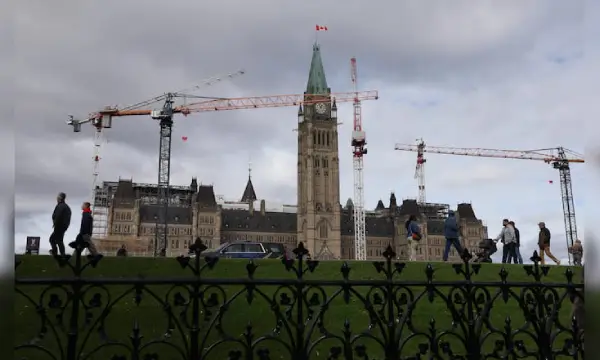
Prime Minister Mark Carney’s government plans to transition up to 200,000 temporary residents to permanent residency by the end of 2027, in addition to its annual immigration target.
The Canadian government’s immigration levels plan maintained its annual targets for temporary and permanent residents at 370,000 and 380,000 respectively through 2029. But a one-time measure will also grant permanent residency to some individuals who are already living in the country on a temporary basis.
Canada’s non-permanent resident population ballooned after the Covid-19 pandemic as the government relaxed rules for international student and temporary worker visas, reaching nearly 3 million people in October 2024. The surge of newcomers strained housing and services and prompted a public backlash.
Canada also welcomed large numbers of Ukrainian refugees after Russia’s full-scale invasion in 2022.
The federal government has since tightened rules and pledged to reduce the share of non-permanent residents to 5% of the population by the end of next year.
As of July 1, the number of non-permanent residents in Canada had dropped to less than 2.8 million, representing 6.7% of the population.
The effort to move temporary residents to PR status will be divided equally into two streams, one focused on workers and the other on people who are in Canada for humanitarian reasons.
Carney said the individuals who will qualify have effectively already been permanent residents of their communities, whether they’re temporary workers or Ukrainians who have been here for years.
“It’s the right thing to do,” Carney said in a news conference on Friday.
The opposition Conservatives accused Carney of trying to bury the plan in Thursday’s federal budget. The move brings Canada’s permanent resident target for 2027 to the highest on record, they said.
“I hope there’ll be some actual debate. He did it right before Parliament closes for 10 days,” Conservative Leader Pierre Poilievre said on BNN Bloomberg Television. “We need to have vastly lower numbers while housing, healthcare, and jobs catch up with the enormous increases in population that the Liberals have brought in over the last decade.”
In a briefing with reporters, immigration officials said provinces and territories will be able to choose how many people from the worker stream they would like to take on to address regional labor needs.
Provinces have been lobbying the federal government for more control over immigration, including higher allocations through the provincial nominee program, which allows them to select permanent residents for their jurisdictions. Some business groups have also been calling for a regional approach to immigration to address varying labor needs across communities.
The second cohort of the government’s one-time initiative will focus on family reunification and Canada’s existing humanitarian commitments, the government said.
Later on Friday, the government announced moves to loosen up its controversial temporary foreign worker program.
Employers that want to bring in temporary workers already have to apply for a labor market impact assessment, or LMIA. Those applications will now last for two years for lower-wage jobs, rather than one.
The government is also proposing to give provincial and territorial governments more say in what kinds of jobs will be eligible to be filled by temporary foreign workers.
Provinces and territories will be able to designate “eligible employers in communities they identify.” Those employers would be allowed to have a larger percentage of temporary workers in low-wage jobs. The idea is to make it easier for businesses to get workers to fill jobs in regions where staff are hard to find.
Other Latest News

"Great damage" has been done over the last 12 years to the fabric of India, democracy and institutions, Congress Parliamentary Party Chairperson Sonia Gandhi has alleged, asserting that even after the Modi government goes, it will take time to restore the country's systems back to health.
In an interview with The Hindu ahead of the launch of her book, 'Belonging: A Journey of Love', she also pointed out that people are now beginning to be restless and recognising the damage.

Tamil Nadu Chief Minister C Joseph Vijay has ordered the implementation of the 'Vetri Laptop Scheme' for college students, and Rs 2,000 crore is the allocation for the initiative, the state government said on Saturday.
A high-level committee will be formed under the chief minister's leadership for implementing the free laptop scheme, announced in the 2026-27 budget, for college students.

Noel N Tata, Chairman of Tata Trusts, has been appointed as Chairman Emeritus of Voltas, a day after he retired as Chairman and Director of the leading cooling products maker.
Noel Tata will retire as Chairman and Director of Voltas Ltd on November 11, 2026, upon attaining the age of superannuation under Tata Group governance guidelines.
The United States military announced on Friday that Washington is offering a $20 million reward "and possible relocation" for details concerning Iran's nuclear programme, even as President Donald Trump asserted that Tehran is eager to conclude the ongoing war.

Samvat 2082 ended on a strong note, with both the Sensex and the Nifty 50 posting weekly gains of 8.6-8.8 per cent, their biggest in nearly six years. This, in turn, brought an encouraging close to their weakest Samvat performance in 15 years.