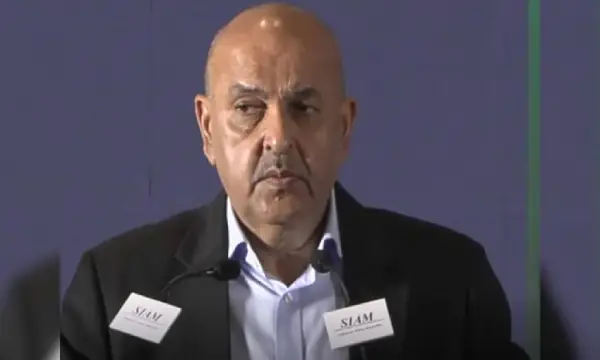
Supreme Court tightens food warning labels in new setback for industry
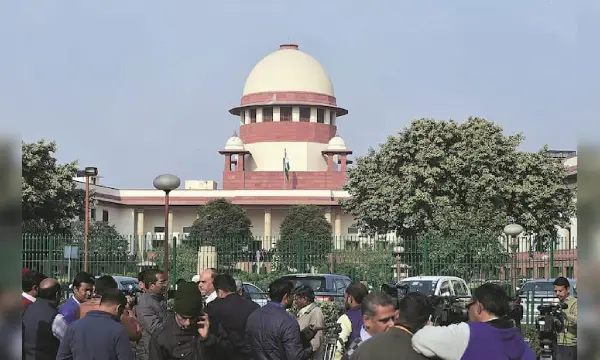
India's top court ruled on Thursday that separate warning labels should appear on the front of food packaging for every nutrient of concern, tightening a government proposal that called for a single label and dealing a blow to the $100 billion industry that has long opposed the measure.
India is in the midst of an unprecedented food safety crackdown, including nationwide raids against restaurants, amid concern over poor hygiene and standards. The government's plan for front-of-pack red warning labels came after heated public debate on the lack of such measures.
The order will be a major setback to food and drink players such as PepsiCo, Mondelez, Coca-Cola and Nestle that have long opposed such labels. Most foreign companies count India as one of their biggest consumer markets, and executives privately say such measures could impact sales of both local and international food products.
On Thursday, the Supreme Court said the government needs to tighten its proposal, mandating separate hexagon-shaped warning labels for high salt, sugar and fat on the front of packs, not only one as proposed earlier by the Food Safety and Standards Authority of India.
The authority shall ensure that a separate hexagon for each "nutrient of concern, each containing the word high fat, high sugar, high salt ... rather than a single combined hexagon," Supreme Court judge J.B. Pardiwala said.
Pardiwala asked the lawyers why they were not smiling after hearing the ruling. When one replied that he represented the food industry, the judge teased by saying once the lawyer gets through all 150 pages of the ruling, "perhaps nothing will remain on your face."
"This is larger public interest, national interest," the judge added, calling for strict implementation of the court's orders.
The nationwide debate on food safety has intensified since Reuters reported in August that India's government had opted for a weaker labelling regime after lobbying by Coca-Cola and groups backing Nestle and PepsiCo, which argued warning labels were ineffective.
However, many companies have implemented such measures voluntarily in European markets.
Health activists welcomed Thursday's ruling.
"This is certainly a landmark development in the nutritional history of the country," said Rajiv Shankar Dvivedi, the lead counsel for non-profit "3S And Our Health", which had challenged the government in the Supreme Court for the lack of warning labels.
Other Latest News
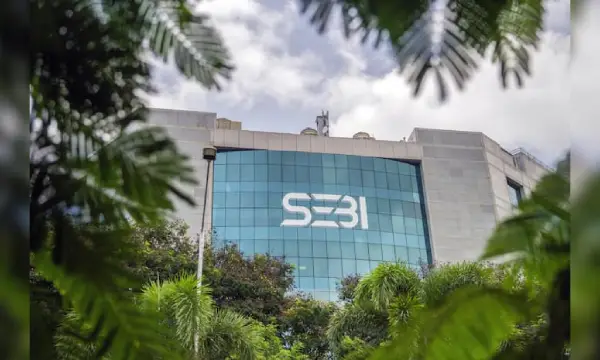
Markets regulator Sebi has appointed a forensic auditor to assist in a probe into the affairs of Coffee Day Enterprises Ltd, following directions from the Securities Appellate Tribunal (SAT).
The SAT had on November 5 directed the Securities and Exchange Board of India (Sebi) to conduct a fresh, independent and comprehensive investigation into the alleged diversion of ₹3,535 crore from seven subsidiaries of Coffee Day Enterprises Ltd (CDEL) to Mysore Amalgamated Coffee Estates Ltd (MACEL), an entity linked to the company's promoters.

India accounted for the highest number of videos removed by YouTube for violating its Community Guidelines in the April-June 2026 quarter, according to the latest YouTube Community Guidelines Transparency Report.
The report, which tracks YouTube’s enforcement of its content policies, showed that the video platform removed a total of 11.15 million videos globally during the three months for violating its Community Guidelines.

Crude oil prices rose in early Asian trade on Thursday, extending gains from the previous session on supply concerns after Yemen's Houthis said they had hit Saudi Arabia's largest oil refinery and at least two ships hit Iranian mines in the Strait of Hormuz.
Brent crude futures were 10 cents, or 0.1%, higher at $94.71 a barrel by 0137 GMT. US West Texas Intermediate crude futures rose 35 cents, or 0.4%, to $84.03 a barrel.
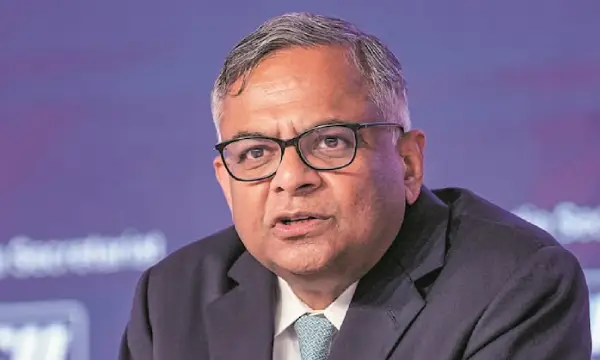
Tata Trusts has moved the Bombay High Court against Tata Sons, the holding company in which the cluster of 14 charitable trusts has a 66 per cent stake, and its directors. The move is meant to challenge the decisions of the previous Tata Sons board meeting on September 17 and seek to stall some of the critical items listed for the forthcoming board meeting on November 30. Specifically, the court case will challenge the reappointment of N Chandrasekaran as chairman of Tata Sons for a third term, citing Article 121 of the Articles of Association of the company and its alleged contravention on September 17.

Global ecommerce platform Amazon on Wednesday said cumulative exports from India through its flagship Amazon Global Selling programme had crossed $27 billion, marking progress towards its target of enabling $80 billion in exports by 2030.
The company had crossed $20 billion in cumulative exports last year.