Sebi backs LTCG tax relief: What Shankar Sharma, Samir Arora said earlier
The Securities and Exchange Board of India (Sebi) has reportedly recommended that the government remove long-term capital gains (LTCG) tax for foreign investors. The proposal is among the recommendations made by the market regulator as part of its pre-Budget representations, news agency Reuters reported on Monday.
Market investors have called for the removal of the tax for several years. The demand comes amid a period of underperformance for Indian equities, which have lagged their emerging-market peers over the past two years.
Foreign investors have also stepped up their selling of Indian stocks, with net outflows reaching a record $31 billion this year. At the same time, overseas investments by Indian retail investors have increased as domestic market returns have remained subdued, it added.
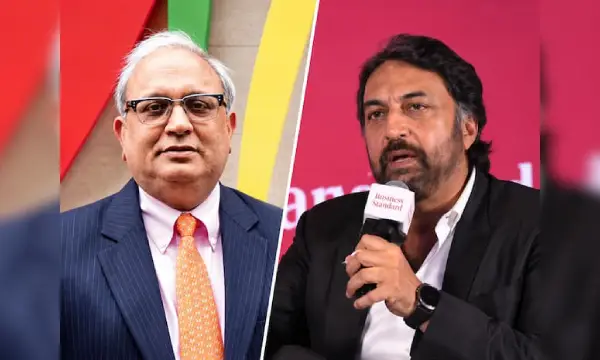
Notably, market investors Shankar Sharma and Samir Arora had highlighted the issue at different Business Standard summits, calling for scrapping the levy to attract overseas capital into India.
Shankar Sharma: Roll out the red carpet for foreign capital
At Business Standard BFSI Insight Summit 2026, held last week in Mumbai, Shankar Sharma, founder of GQuant Investech, called for zero capital gains tax for foreign investors as he argued India needs dollar inflows to address its external sector concerns.
"I do believe that, as a government, we have been very arrogant with foreign capital. When you run a current account deficit, the first order of the day is that you have to roll out the red carpet for dollars. It is a basic, undeniable fact. Instead of that, we have kept putting roadblock after roadblock in place. Capital gains tax is only one factor," Sharma said.
He called for lower taxes, global roadshows and special investment vehicles to attract overseas investors.
"Do something that tells them 'this is a knife through butter entry into India.' Capital will come. Once you have capital coming in, you get some breathing time to fix your current account problem. Today, we have a current account deficit and a balance of payments problem, both occurring simultaneously," he said.
"I invest across the world, and I pay zero per cent capital gains tax. This is in the US, which has no shortage of capital. They have zero per cent capital gains tax for foreigners. Why does a poor country with a dollar deficiency have that tax?" Sharma added.
He also argued that India should consider a similar approach to attract foreign capital.
"If the US wants dollar capital to come in, who are we to say we won't follow a similar policy? We need dollars more than America does. For America, the dollar is a commodity. Ours is not," Sharma said.
Samir Arora: Capital gains tax is a ‘big’ policy mistake
Samir Arora, founder of Helios Capital, had raised similar concerns at the Business Standard Manthan Summit in February last year. He said taxing foreign investors on their capital gains was hurting sentiment and called on the government to waive the levy.
"The biggest mistake they (the government) have made, the biggest souring of sentiment, and reality which they have to accept is capital gains tax in India, particularly the foreign investors, is 100 per cent wrong," Arora said.
He referred to foreign sovereign funds, pension funds, universities and high net worth individuals (HNIs) as some of the largest investors in global and Indian markets.
"The largest investors in the world and in India are Foreign Sovereign Funds, Pension Funds, Universities, and the High Net worth Individuals (HNIs)," he said.
Arora also argued that foreign investors faced currency-related risks and did not have tax set-offs available in their home countries. He said taxing their gains added to the burden on overseas investors.
"India, however, should waive the capital gains tax to respect the markets and foreign investors," he said.
Other Latest News

The Enforcement Directorate has registered a money laundering case against media baron Subhash Chandra in connection with an alleged loan fraud that caused a ₹1,322 crore loss to Life Insurance Corporation Housing Finance Limited (LICHFL), officials said on Monday.

HDFC Capital has partnered with realty firm DivyaSree Developers to set up a ₹1,500 crore platform for building residential projects.
In a statement on Monday, Bengaluru-based DivyaSree Developers said it has partnered with HDFC Capital Advisors Ltd to "establish an ₹1,500 crore residential platform in India."
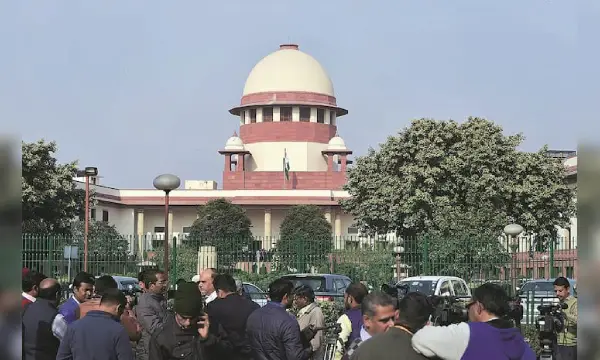
A plea has been filed in the Supreme Court seeking the constitution of a committee or a commission to determine whether the Ram temple at Ayodhya stands on the exact premises and land which was adjudicated by the apex court in its 2019 verdict.
In a landmark judgment delivered on November 9, 2019, a five-judge constitution bench of the apex court had paved the way for the construction of the Ram Temple by a trust at the disputed site at Ayodhya.

The government on Friday extended the customs duty exemption on cotton imports by two months till December 31, 2026, from the earlier deadline of October 31, 2026, to improve the availability of the fibre for the domestic textile industry.
The Ministry of Finance, through a notification dated October 30, amended the existing notification issued on May 30, 2026, to extend the exemption.
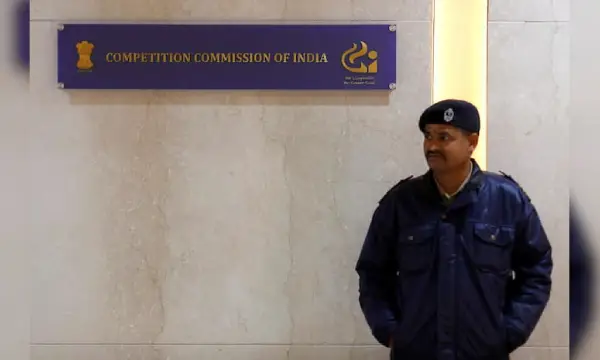
The Competition Commission of India (CCI) on Friday approved four major corporate transactions, headlined by French telecom billionaire Xavier Niel's 5.1 billion euro acquisition of a 16.2 per cent stake in UK-based telecommunications major Vodafone Group PLC.
The Vodafone transaction is being executed through Vega SAS, a French holding company and subsidiary of Maya SAS, which serves as Niel's family investment vehicle.