
Robin Williams: The clown who wasn’t
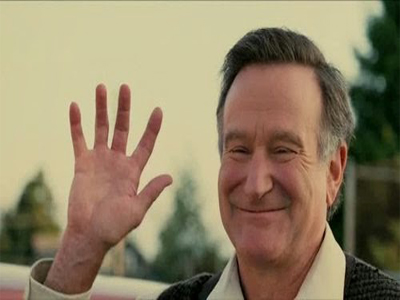
Hollywood star Robin Williams who was found dead from suspected suicide at his California residence last night was certainly one of the funniest men of his generation.
Autobiography of a Clown was a staple topic for essay writing in school in our time. Produce two pages in the voice of Bozo (or Koko or whatever), the circus clown. The formula was straightforward, and I don’t know of anyone who ever deviated from it. Every day, Bozo appears before cheering kids and their parents and makes them laugh their guts out with his antics. But no one knows about the deep sadness in his heart. Only when he returns to his make-up room and starts taking off his outlandish wig and his false red nose, do we come to know that he has lost a son/ his wife is a cripple/ he suffers from some incurable disease, or some such calamity. But he is a professional. His job is to make a fool of himself in public and make people laugh. He does that brilliantly every day. People love him yet know nothing about the man behind the ridiculous mask.
Hollywood star Robin Williams who was found dead from suspected suicide at his California residence last night was certainly one of the funniest men of his generation. Whether as Mrs Doubtfire, or the gay father desperately trying to help along his heterosexual son’s love life in The Birdcage, or the genie’s voice in Disney’s Aladdin, he made millions across the world guffaw till they wanted to beg him to stop. The moment he appeared on screen, he was carrying the promise of the unusual, the zany and the comic. There was that slightly odd gleam in his eye, that certain something in the way he carried his stocky frame that hinted that anything was now possible. He embraced and rejoiced in the weird; it’s no surprise therefore that he first came to popular attention playing an alien in the TV serial Mork and Mindy.
He stuck to his funny—and extremely extroverted—persona in all his public appearances. Watching him on TV at the Oscars or some other Hollywood get-together was to be awed by his boundless energy, the endless number of funny accents and voices he could summon at will, and above all, his commitment to make his audience roll in the aisles. Sometimes, it seemed like here was an exhibitionist gone amok. But you laughed and laughed. After all, his first love, you’d heard, was stand-up comedy, that loneliest and bravest of professions, and Williams returned to it time and again, even after he was one of the world’s most bankable stars.
But Williams was not just a comedian. The odd gleam in his eye vanished when he appeared in films like Dead Poets Society, One Hour Photo or Insomnia. In Dead Poets, he played a schoolteacher who saw his mission as one to create free minds, and turned in a performance that inspires the schoolboy in me even today, and brings a lump to my throat. It got darker with One Hour Photo, where he was a lonely photo lab technician in a one-hour photo shop, who gets obsessed with what appears to be a perfectly happy family. He turns stalker, and begins to lose his grip on sanity. The memories of a deeply disturbed childhood catch up with him, and the film enters truly disturbing areas of the human mind. Master of Darkness Christopher Nolan’s Insomnia featured him in what was perhaps his most negative role—a pitiless fully-self-aware psychotic playing cat-and-mouse with Al Pacino as a detective on the edge of a nervous breakdown. There is not the slightest hint of anything goofy here. Williams’s performance is one of remarkable restraint while generating an air of disquiet and menace every time he is on screen.
His range as an actor knew no limits. He would have made as good an Iago as a King Lear. Quite possibly, he would have made an outstanding King Lear, the likes of which have never been seen before.
ow he is gone. Media reports tell us that he had been fighting alcohol and drug problems for decades. His publicist has released a statement that he had been suffering from deep depression for some time now. This is the second luminous talent Hollywood—and cinema—has lost this year. In February, Philip Seymour Hoffman, that marvellous actor who seemed to be getting better with every passing year and would have quite possibly been hailed as one of the greatest ever if he had a full career, died of a drug overdose. Hoffman was only 46. Williams was 63, which is also hardly an age when actors hang up their boots.
In spite of all his brilliance, Williams had only won one Oscar, for best supporting role in Good Will Hunting (another role with no gleam in the eye). He deserved more, perhaps a lifetime achievement one, at some point, when Hollywood decided he was hoary enough.
That will not be. And as I look at Williams’s photos on Google, I seem to notice a constant hint of melancholy in his face, a sort of unease—the downturned lips even when he smiles, a glimpse of insecurity, even fear, in his eyes.
Or I am just imagining all this. It’s so easy to say these things, post-facto.
How does one end an obituary of someone who you never knew, but who gave you so much fun, and who you respected so much for his craft from a vast distance? I went to trusty imdb.com, and looked for quotes by Robin Williams. I’ve selected two. “Comedy is acting out optimism,” he once said. And, “You’re only given one little spark of madness. You mustn’t lose it.”
Right at the end, that precious optimism seems to have deserted him, and that spark of madness turned malign.
Or maybe not. As the genie said when Aladdin freed him from his servitude, and he said it in the way that only Williams could: “I’m history! No, I’m mythology! Nah, I don’t care what I am; I’m free.”
Other Latest News
.webp)
West Bengal Chief Minister Mamata Banerjee and her nephew and TMC's national general secretary Abhishek Banerjee will hold a virtual meeting with all counting agents of the party on Saturday afternoon, two days ahead of the counting of votes polled in the assembly elections, a senior party leader said.
The meeting, scheduled for 4 pm, will be attended by the counting agents from the 291 Assembly constituencies, where the ruling party fielded its candidates.
.webp)
The Lucknow bench of the Allahabad High Court on Friday expressed displeasure over what it termed a growing tendency of banks to arbitrarily freeze accounts, observing that a bank acts as a trustee and not an investigative agency.
A division bench of Justice Shekhar B Saraf and Justice Avadhesh Kumar Chaudhary imposed a cost of ₹50,000 on Indian Overseas Bank for freezing a customer's account without valid justification.
.webp)
Railways Minister Ashwini Vaishnaw on Thursday flagged off the 20-coach Vande Bharat Express train between Jammu and Srinagar, the first direct train between the twin capitals of Jammu and Kashmir.
Chief Minister Omar Abdullah and Minister of State in the Prime Minister's Office, Jitendra Singh, were among the dignitaries present at the flagging off ceremony.
.webp)
The Supreme Court on Thursday sought response from the Centre and others on a PIL seeking directions to establish a revenue judicial service, and prescribe minimum legal qualification and training module for public servants adjudicating land disputes.
A bench of Chief Justice Surya Kant and Justice Joymalya Bagchi issued notice to the Union of India.
.webp)
India's markets regulator has approved a change of control at RBL Bank, the lender said on Thursday, related to a proposed deal that would see Dubai's Emirates NBD acquire a majority stake.
The nod from the Securities and Exchange Board of India marks a key regulatory milestone for one of the largest cross-border deals in the country's financial sector.
.webp)
.webp)
.webp)
.webp)
.webp)


